
Your privacy is very important to us. When you visit our website, please agree to the use of all cookies. For more information about personal data processing, please go to Privacy Policy.

e3_banpc.jpg e3_banph.jpg
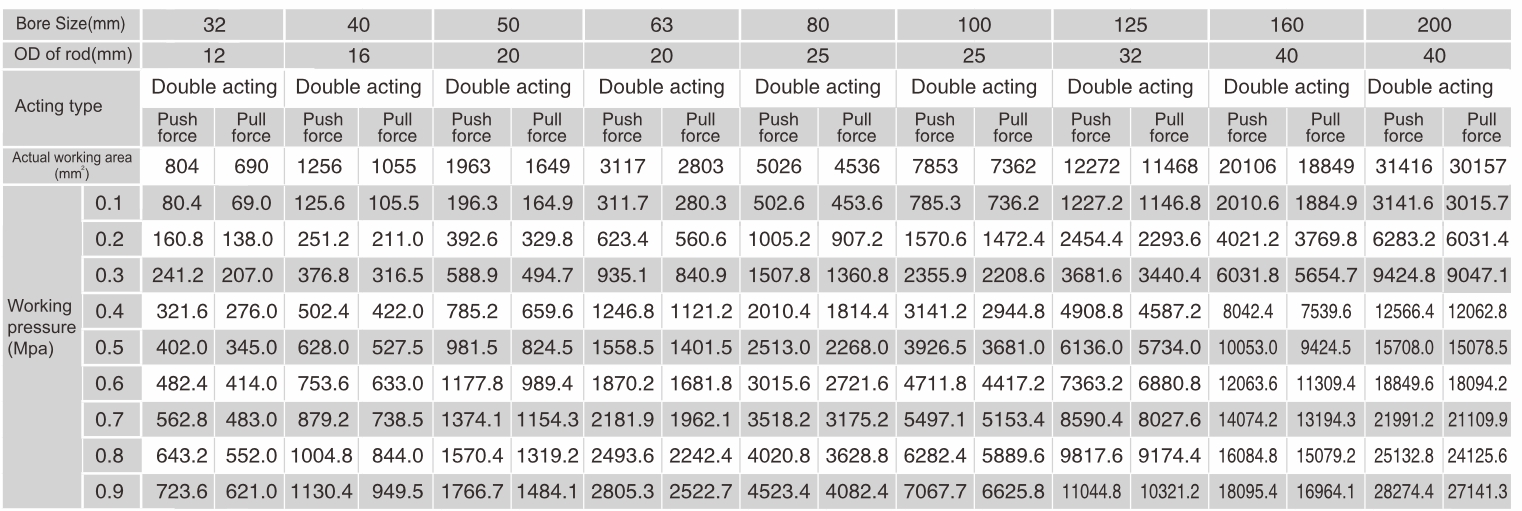
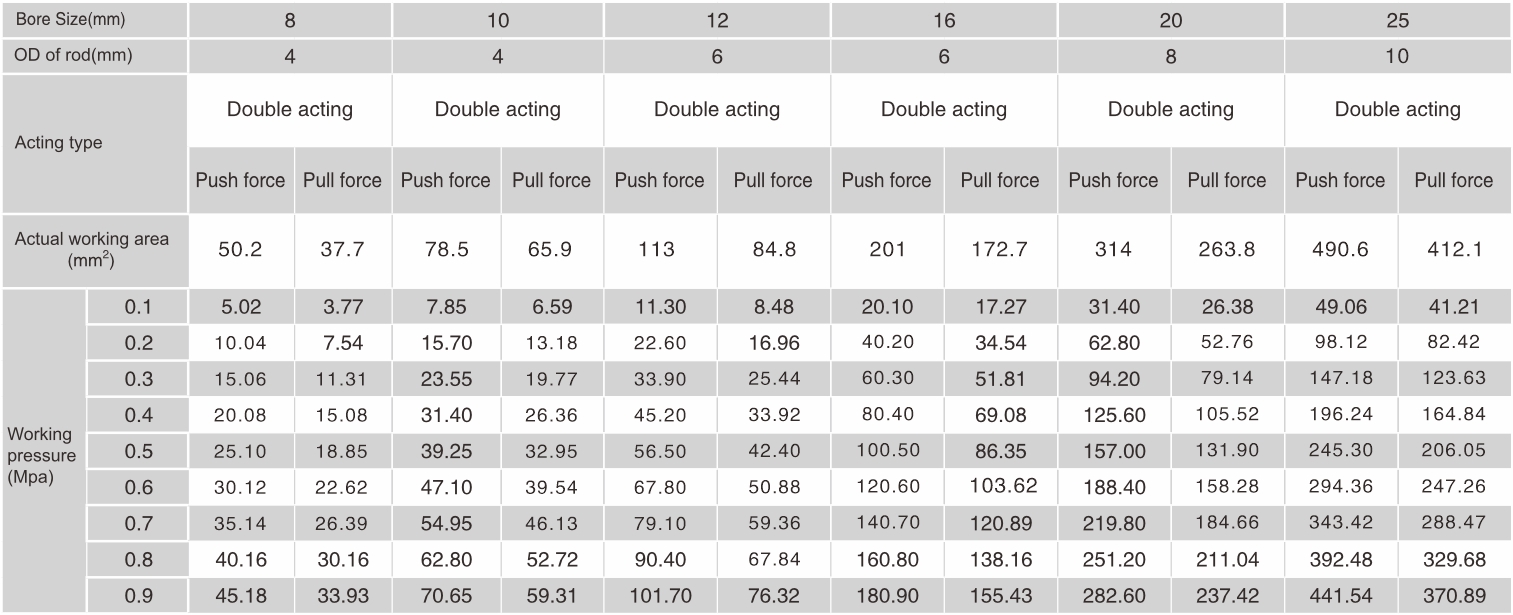
  • Air Cylinder Theory (Repeat Action Type) – Force Table

    Air Cylinder Theory(Repeat Action Type) – Force Table
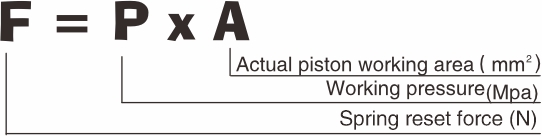

    6.jpg


    Air Cylinder Theory – Force Table

    7.jpg

  • Theoretical cylinder force calculation method (single-acting type)
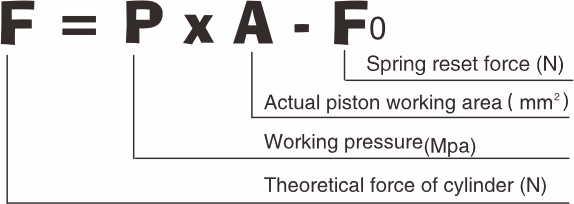
    Theoretical cylinder force calculation method (single-acting type)

    6.jpg


    Air Cylinder Theory – Force Table

    7.jpg

  • Installation and Use

    Installation and Use

    1.To ensure the component has not been damaged during transport please inspect the device prior to installation.

    2. Confirm the pneumatic cylinder selected aligns with the loader.

    3. If using a pneumatic cylinder supporting high temperatures or cold environments, utilize anti-freezing measures or cooling accessories.   

    4. Before connecting tubing to your pneumatic cylinder, make sure all lines are clean and free of debris. 

         We recommend cleaning your working medium with a minimum 25um filtration prior to installation.  

    5. Applying lateral load may limit the life cycle of your pneumatic cylinder if not installed properly. 

       Please ensure you are installing on a clean, level surface. 

    6. If storing your pneumatic cylinder for future use, always ensure the device is treated with an anti-rust treatment and keep all air ports covered.  


  • Attention Points

    Attention Points

    1. Place filter near the direction control valve to remove any possible iron rust, particles or water which may have accumulated in the tube. 

    2. When using your cylinder in corrosive environments always use appropriate tubing materials in conjunction with the device.

    3. Ensure the cross section of tube between the cylinder and directional control valve has the appropriate selection basedon your stated piston speed. 

    4.  Remove all particulates, iron rust etc. prior to installation or repair.

    5. Always use appropriate seals and lubricants to connect your component.

    6. Piston rods should be chosen for use based on actual load. Varying load rates may adversely affect the performance of the component. 


  • After Use

    After Use

    1. When installing the cylinder in temperatures below 5*C or above 60*C, use the appropriate sealing materials. Ex: Viton, Teflon tape etc.  

    2. If using pneumatic cylinders in corrosive or dangerous environments, take appropriate protective measures. We recommend you contact us if you intended use extends into harsh environments. 

    3. The compressed air entering the component but be free of particles and moisture.

    4. The air cushion is designed to absorb the impact of the piston at the end of the stroke. 

    5. The cushion positioning is pre-set with your device. Adjusting the cushion can be done by adjusting the needle valve to the right to strengthen the buffer, or left to weaken it.

    6. For best results avoid using the pneumatic cylinder directly under cutting compounds, refrigerants, rust and corrosive spatter. 


  • Please Note

    Please Note 

    1. Always use the correct cylinder for the appropriate amount of force for your objective.

    2. Applying excessive force causing damage to the cylinder barrel may create scaring within the barrel resulting in poor performance.

    3. Please ensure you are installing your cylinder on a level surface to avoid shifting which could result in poor performance of your  component.  

    4. Always use the appropriate cylinder for your specific project. Installing the incorrect cylinder for your project can result in damage to your device.

  • Product Selection

    Product Selection


    1、Confirm the internal diameter of the cylinder 

    ① Axial load thrust of the cylinder shall be confirmed according to actual load situation of the required cylinder;     

    ② Load rate η of the cylinder shall be confirmed according to the action situation of the load;        

         Load rate has relationship with action speed of the cylinder, which is generally recommended as:             

         Under static load or low speed:             η≤0.7                     

         Speed 50~50mm /s:                                η≤0.5

         When speed  >500mm /s:                      η≤0.3

     ③ Working pressure of the cylinder shall be confirmed according to the condition of air supply.


    2、Confirm the cylinder stroke                       

    The stroke of cylinder is pre-selected according to the ratio of cylinder operation distance and stroke of transmission mechanism. 

    To facilitate installing and debugging, there shall be proper allowance left for the stroke calculated. 

    Standard strokes guaranteed with quick supply are advised to be chosen as possible as one can, which can help to cut down your cost. 


    3、Confirm the cylinder type                                             

    The type of the cylinder shall be selected according to the specific requirements of application and installation of the cylinder.


    4、Selection of buffer way of the cylinder

    There are different buffer devices equipped to the cylinders made by our company. 

    Customer shall choose them according to the action situation of actual load. 

    If both of the load and speed are higher, it is difficult to absorb the impact only by the buffer of the cylinder itself. 

    Therefore, buffer circuit must be designed or use external buffer to release the impact.


    5、Confirm whether the cylinder has magnet

    Whether the cylinder has sensor switch shall be confirmed according to the actual situation.

    And relative magnetic switch shall be chosen to use together.


    6、Selection of installation mode of the cylinder 

          Installation mode of the cylinder shall be selected according to the application and installation requirements of the cylinder.


    7、Selection of connecting mode of piston rod of the cylinder

    After the cylinder is pre-selected, it is necessary to check the stability of piston rod (especially the piston is thinner, longer and larger) of the cylinder according to different installation modes and the air consumption under actual application condition shall be checked. 


  • Maintenance and Service

    Maintenance and Service

    1、Maintenance should be done under safety condition, please turn off the power and air source first; makeing sure there is no air leaving in the tube;

    2、Before attaching/removing rod end attachements, the cylinder must be fully retracted. 

          The rod should never be pulled out, or be rotated when attaching/removing the rod end attachements.

          The rod end attachement should be screwed tightly on the rod end, with balanced locking force.

           Before usage, make sure no interference is present by manually checking the cylinder and attachement. 

           After that, air can be supplied to the cylinder for use;

    3、There should be no damage in the sliding parts between the cylinder and piston rod to prevent the air leakage caused by poor action of the cylinder and damage of seal parts of piston rod;

    4、If the cylinder is not used for a long time, it shall be regularly actuated and shall be coated with oil to prevent  it get rusted;

    5、Please read the relevant content in this manual for the requirement of the cylinder about the air quality, application condition, tube connection and cylinder lubrication.


  • Debugging

    Debugging

    1、Speed control valve shall be installed at the two sides of the cylinder.

    • Check valve shall be opened gradually from completely closed state when the cylinder is debugged and the drive speed of the cylinder shall be gradually and slowly adjusted to the required speed.

    • There are two ways for installing check valve, including exhaust throttle and inlet throttle. Exhaust throttle is mostly adopted in pneumatic system because the cylinder will produce back pressure during work through exhaust throttle and ensuring relatively stable moving speed or  speed adjustment, which will help avoid impact on cylinder cover caused by sudden and quick propulsion of piston rod when starting.


    2、When the cylinder with buffer function is debugged, according to the load and speed, the flow control valve mounted on the cylinder cover shall be adjusted gradually from low to high level to ensure the cylinder will have no rebounding. What shall be noticed is not to adjust the buffer to the end state in debugging the stroke, otherwise there will be poor buffer or damage of seals caused by piston under high-speed situation.


  • Installation and Use

    Installation and Use


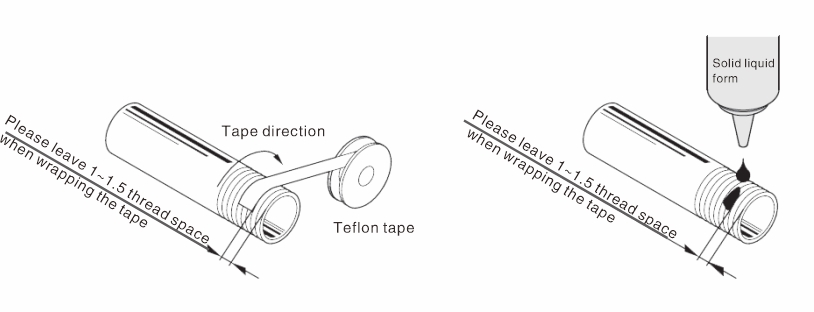
    1、 Prevent debris and dirt and other impurities into the cylinderbefore connect with pipe.1~1.5 thread pitch  should be 

           reserved for wrapping tape. Don't wrap the tape around .
    英大4气缸1.jpg

    2、To avoid overusing or inflowing of the liquid glue into the body when using liquid fixing glue (anaerobic adhesive) to lock the fitting, or it will get the parts stuck, leading not good performance.

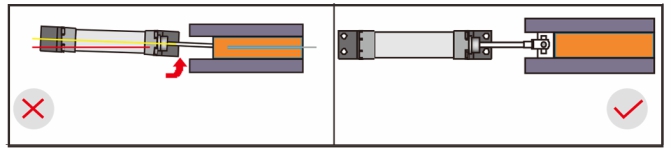
    3、The axes of piston rod shall corresponde with the moving direction of load (coaxial). Piston rod and cylinder will produce opposite force which can easily damage the internal,The internal surface of the cylinder, guide sleeve, the surface of piston rod and seals.
    英大4气缸1.jpg

    4、Avoid direct connection of piston rod, or it will suffer vertical gravity: it shall add idler wheels under the load bottom to support the guide rail(as in below right photo).It is wrong installation as in below left photo, because the piston rod and cylinder will produce opposite force which can easily bend piston rod and damage the internal surface of the cylinder, guide sleeve,  the surface of piston rod and seals.
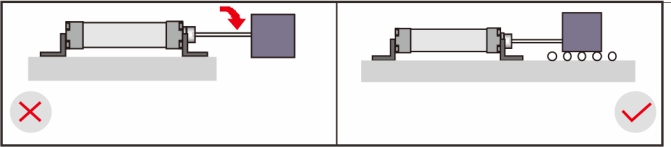
    英大4气缸1.jpg

    5、Avoid direct connection of piston rod, or it will suffer vertical gravity: it shall add idler wheels under the load bottom to support the guide rail(as in below right photo).It is wrong installation as in below left photo,because the piston rod and cylinder will produce opposite force which can easily bend piston rod and damage the internal surface of the cylinder, guide sleeve,  the surface of piston rod and seals.
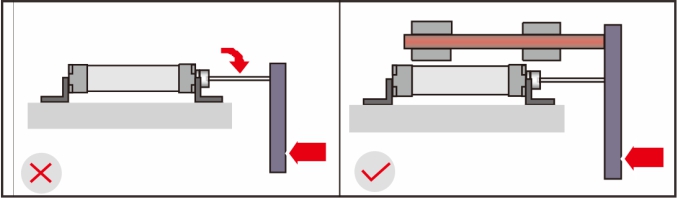
    英大4气缸1.jpg

    6、To prevent that back activity hinge is far from force supply point,  the piston rod will be influenced by torque force. To use middle action support to shorten the long distance between support point and force supply point.
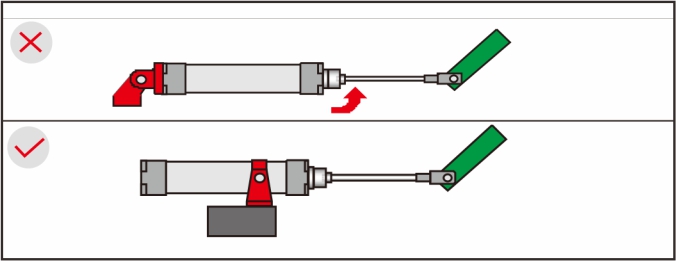
    6.jpg

    7、Long-stroke cylinder shall set middle guide support to prevent natural drop of piston rod and to prevent the damage on piston rod caused by the droop of piston rod, bend of the cylinder, vibration and external load.
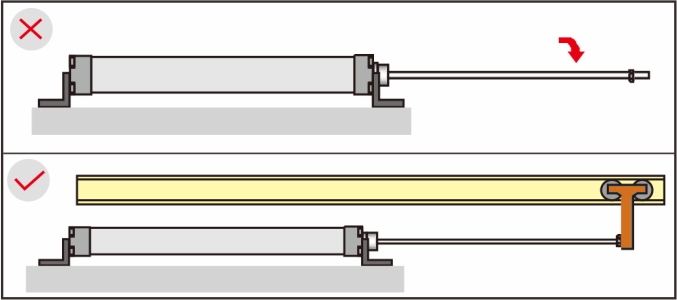
    7.jpg

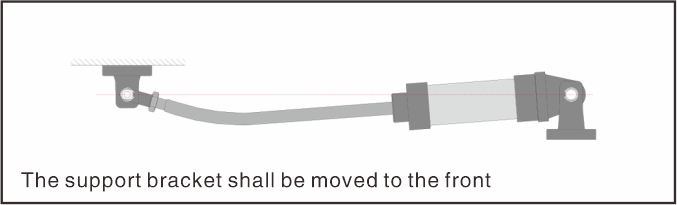
    8、It tends to bend at long stroke, thus the installation bracket shall be moved to the front cover.
    8.jpg

    9、The fixed cylinder shall not be connected with the rocker carrying out circular action (fixed with LB). At this time, it shall be connected with swing cylinder (fixed with CA/ CB/TC )  

    9.jpg

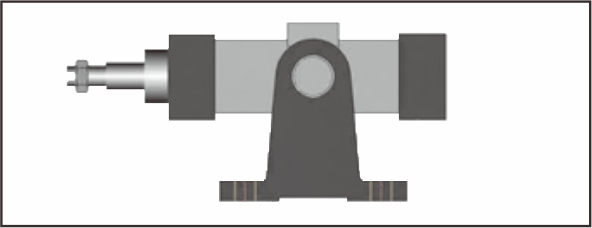
    10、If the height (H) between installation surface of bearing bracket and the position of bearing is too great, when cylinder works, the installation part of the support will produce great torque force,Which may cause damage to installing bolt and other parts.
    10.jpg

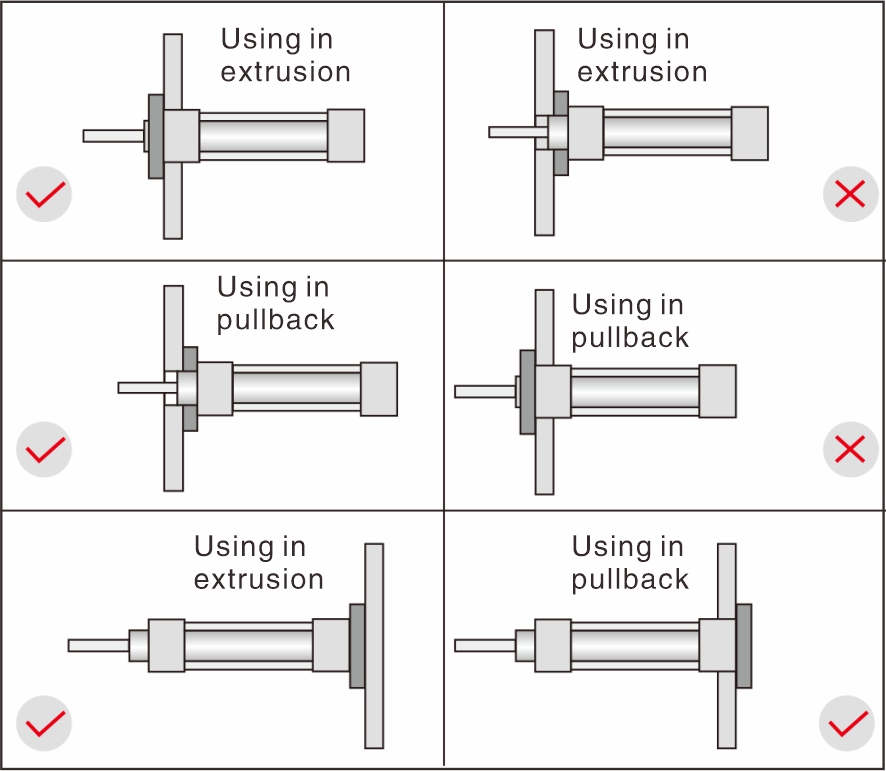
    11、Proper installation shall be adopted considering the directionof load (flange type installation).
    11.jpg


a1_img22.jpg

Customized Products, Better Solution

With "Eternal innovation and faithful working", from good to great, we strives to offer more value to all our customers and partners.